Writing Projects

My main writing project is about Teochew, my birthplace.
Teochew is a place the size of half Wales, where the population exploded by immigration from central China. In Ming (14-17th Century AD) and Qing Dynasty (17-20th Century AD), the contradiction between density of population and scarcity of agricultural areas spurred emigrants towards Southeast Asia. Simple wooden boats were painted red on the head. People named them “red-head boats”. Brave young men sailed days and nights and arrived in Thailand, Malays, Borneo, Philippines…all the peninsulas and islands in Southeastern Asia. Starting to lay down their roots in the other lands, their impact became larger and larger on local societies. Two Teochew community leaders even once became kings of two major Southeastern Asia countries, Zheng Xin for Thailand and Lin Feng for the Philippines. Since then, business and cultural networks have been built for hundred years by Teochew people.
Melissa Macauley in her newly published academic work “Distant Shores” notes: “(Teochew people) reaped many of the benefits of an oversea colonial system without establishing formal governing authority. Their power was sustained instead through a mosaic of familial, fraternal, and commercial relationships spread across the ports of Bangkok, Singapore, Saigon, Hong Kong,Shanghai and Swatow.”
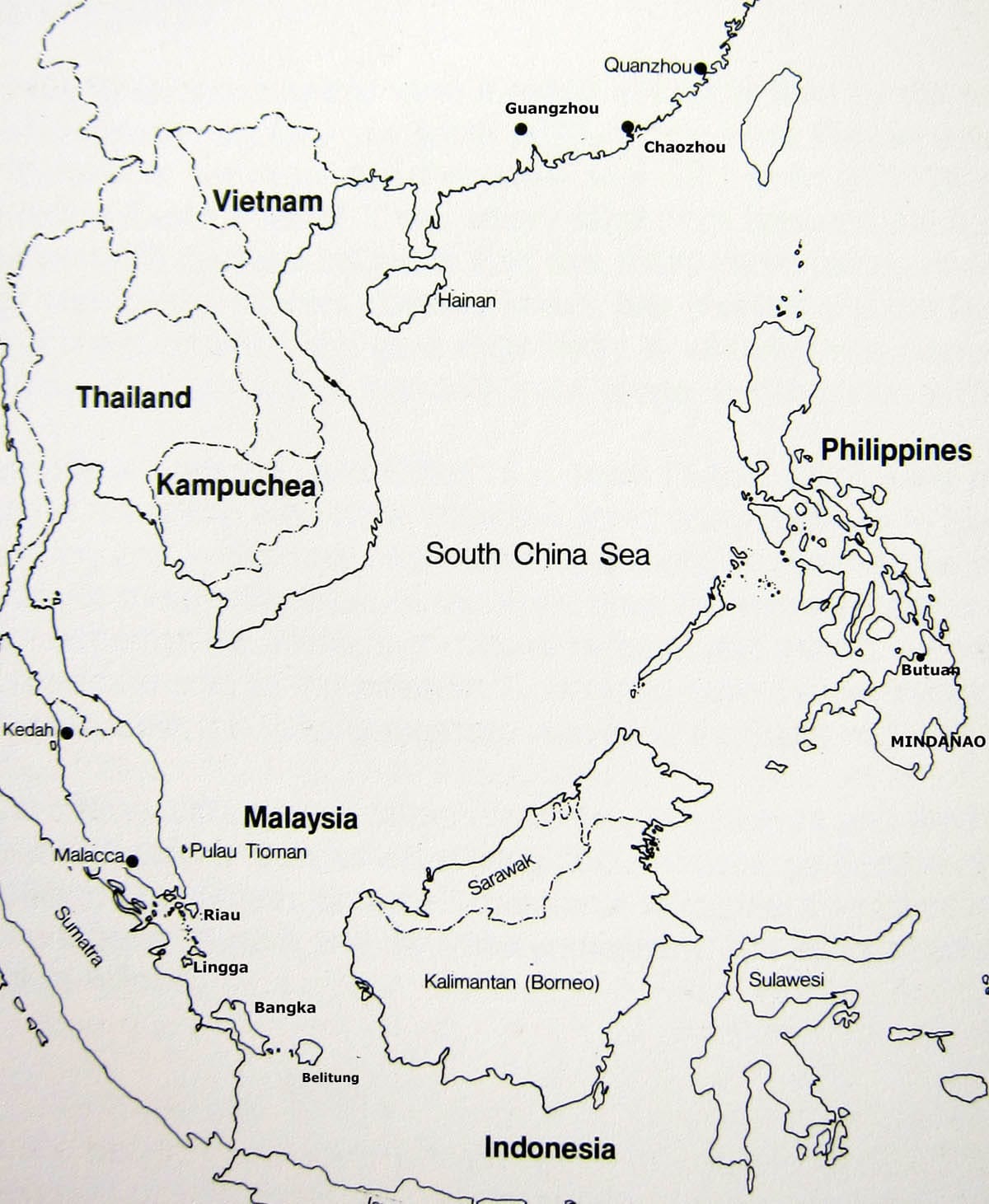
Map of Teochew (Chaozhou) and Southeast Asia
Thailand became an international hub for Teochew people’s business from the 18th Century. Till today, there are about 10 million Teochew people inhabited there, or 15% of the whole country’s population. Many of the top richest families in Thailand actually came from Teochew. For international powers which wanted to open up China, Thailand, especially Bangkok, was the best springboard to leap from. In early 19th Century, missionaries were already sent to Bangkok to aim at entering China. The American Baptist Mission (ABM), and the English Presbyterian Mission (EPM), both sent missionaries as pioneers. When the missionaries arrived in Bangkok, they found the majority of Chinese they met there, were from Teochew. Deliberately, missionaries tried to hire Teochew people to help them go to their hometown to spread the Gospel. They also introduced chousha as a business to support their missionaries.
Exploring the diasporic journey of Teochew people is a blend of personal root searching and literary pursuit. Since childhood, I’ve been captivated by the widespread presence of Teochew individuals worldwide. Uncovering connections between my family’s choushabusiness and missionaries from the UK and US a century ago has fueled my creative drive.
My dissertation based on this story for the MA Creative Writing (Nonfiction) in University of East Anglia has been awarded as “Distinction.”
中文作品《出潮入海》,已于2026年6月由上海译文出版社出版。
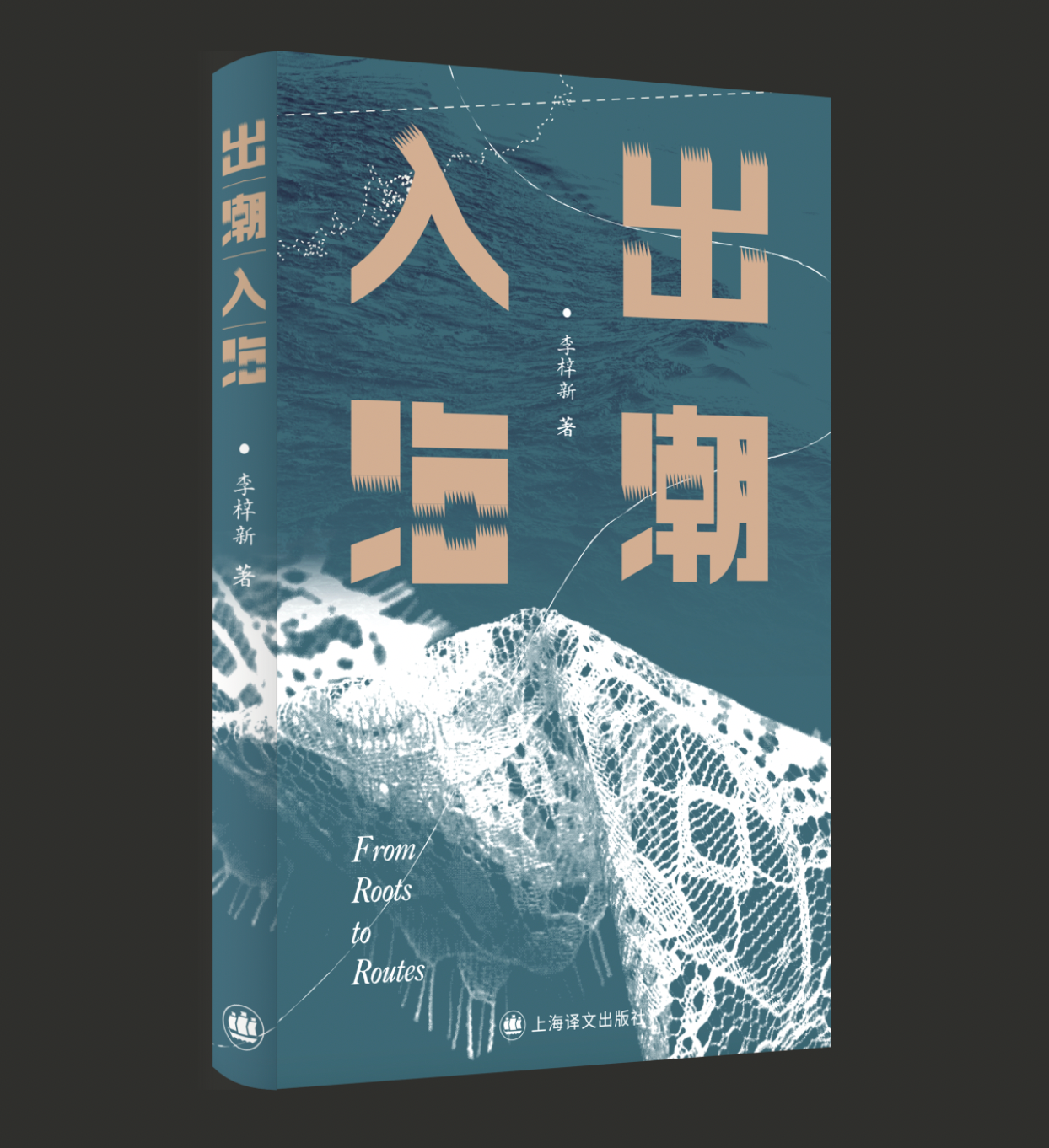
《出潮入海》
上海译文出版社2026年6月第一版
2023年秋天,当我在英国东安格利亚大学(UEA)的创意写作课堂,用英语向英国、美国、印度、津巴布韦的同学描绘我心目中仅存的老厝场景,以及我走出老厝的路,我就像是一位从东方流浪到西方的说书人,在描绘一个传说。这个传说即使在今天的中国,也令人半信半疑。为什么潮汕以往的世界对于我如此神秘又吸引,在交通已经极大方便的今天有点难以理解。为什么一种潮汕特性(Teochewness) 的根源对我如此重要,它背后是怎样的世界性?为何我要离开本土才能充分意识到它?为什么我对一种跨越国界,以文化密码连接的族群流散现象如此着迷?可能我自己都未必清楚。
有一个重要的写作契机,是在四十岁后的近几年中,我才从文献中惊觉,抽纱这种在百年来和我们家庭紧密相连,却又在1990年代因为工厂倒闭而像恐龙一样突然消失的手工行业,居然在很大程度是由来到潮汕的英美传教士引进的技术。潮汕百年前就已广泛存在的世界性,就像它的电影、建筑与外界相互影响,在半个多世纪来被掩盖得少人知晓。
当我在伦敦大学亚非学院(SOAS)亲手接触到英国第一位到华的女传教士Catherine Ricketts的日记原件,看见她1878年穿越美国大陆,再坐轮船到潮汕途中给家乡布莱顿的报纸写的专栏文章、她初到潮汕时写的文笔优美,类似创意写作的述职报告、她用英文发音标注潮汕话发音的学习笔记,以及居住潮汕29年最终在潮州去世的讣告时,想到对于这些西方传教士来说,这种旅程也是一种"出潮入海"。
带着对海洋性的体感和探索,我写下了《出潮入海》这本书,它最早用英文构思,并在UEA写下了一整年的练习草稿,又在回国的一年中找到了它在中文世界的轮廓,再在文本的缝隙,嵌入了我最熟悉的母语——潮州话。所以,这本书也是一部关于语言身份认同追寻的作品。
对于海洋的叙事,曾经被西方世界所主导。东方民族安土重迁,在海域的探索上相对不算辽阔。但潮汕人是大陆居民的另类,他们向海的冒险性与生俱来。这一段潮汕人的海洋离散史,还没有被充分发掘和记录。现在,开始有一批新加坡马来西亚的作家,用英语写他们作为闽潮后代的离散故事,而他们祖辈最先的出发点,在中国大陆东南边缘地带的精神原点、日常仪式和狭窄区域里的生存挣扎,在半个多世纪来都少有作品呈现。因为我们无法用一种内核饱含世界性的语言去描述它。
也正是在英文创意写作的学习中,我明白了非虚构不仅仅是还原事实那么简单,它一直都在要求创作者去寻求自己的表达内核,用自己最真诚的情感去组织真实的事件叙述。只有这样,这些文字才能称之为创作,而不只是记录。而个体的经验并非微弱而不可靠,它反而会成为描述一个系统时所有议题最容易着陆的河床。
非虚构的文字甚至也是时间的容器、自由进出的空间。它可以和记忆共舞。在父母的记忆、我自己的记忆中,时间变成了一个个小房间。推开那扇门,所有记忆就变成了当下。而门外的人,也可以以抽离的状态对那些当下有另一些回味。在此时、彼时、此地、彼地、此我、彼我之间,非虚构的叙事有了多元的状态组合,它甚至弥补了中文写作里时态容易模糊的缺陷,为它探索了新的语言。
对我自己而言,我只是想在少年时就热爱诗词的父亲,在丧失对文字的记忆前,还能读到这本书。我只是想向一年到头繁忙主持各种拜神仪式,一直为远方游子的我祈求神明"保贺"的母亲,留下她值得被书写的日常。我只是想让自己的子女,虽然已经无法传承潮汕话这门难懂的方言,但仍然能读懂他们身上流淌血液的一部分。
这本书里的潮汕只是我自己的版本,它无意成为一本潮汕的指南,或者百科全书。它是一本个人的地方志、放置于全球框架下的家族史,也是对我们的根,对故乡的情感探针。
潮在寻找海,海也在寻找岸。出潮入海,并不只是一个单向度的物理运动。潮汐往复,才是我们真实的生命轨迹。